

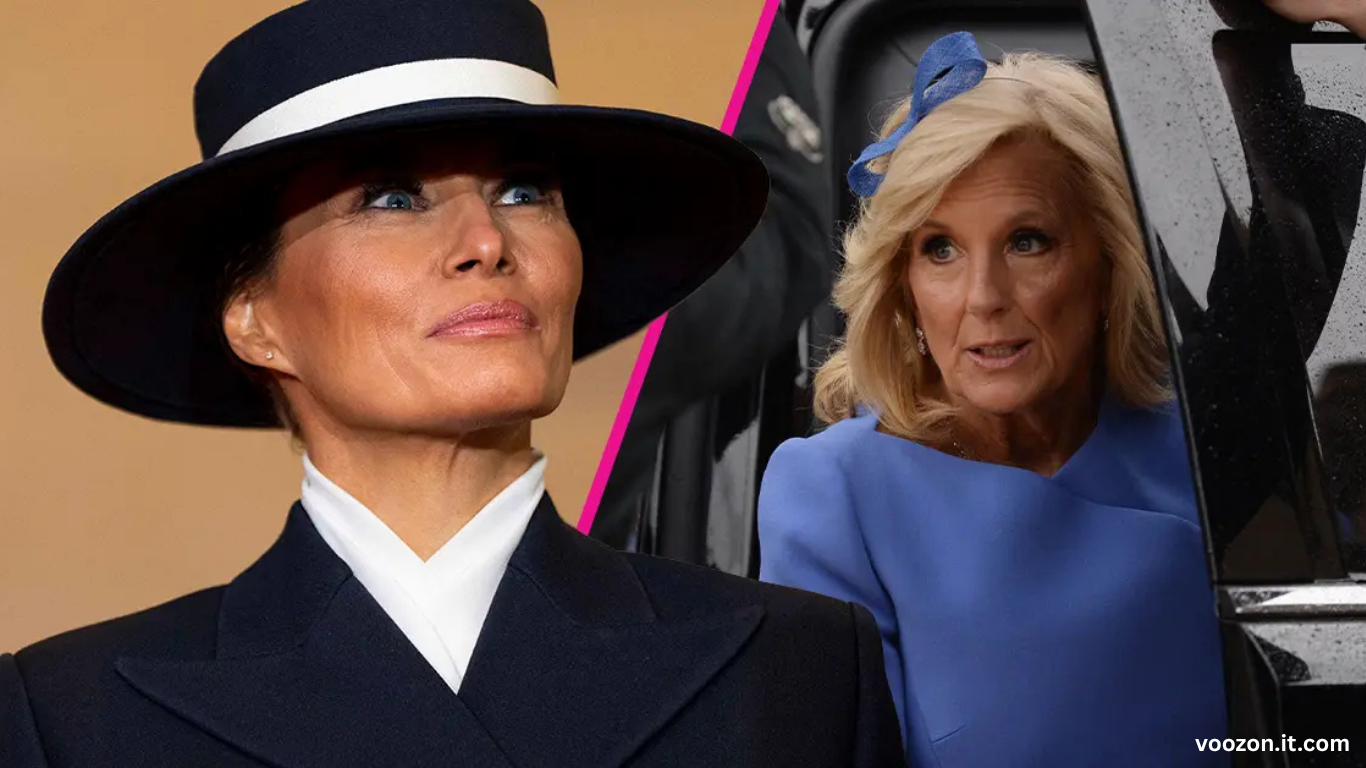
Transition of power in the United States has long been associated with traditions that symbolize unity, continuity, and respect for democratic institutions. One of those traditions is the meeting between the outgoing and incoming first ladies on Inauguration Day. While these moments are often portrayed as cordial and graceful, former First Lady Jill Biden has revealed that her private interaction with Melania Trump during the 2025 presidential inauguration was far from warm.
According to Jill Biden, the car ride she shared with Melania Trump on Inauguration Day was notably awkward, with the incoming first lady repeatedly attempting to steer the conversation toward the weather. Biden described the encounter as “frosty,” suggesting that there was little meaningful dialogue between the two women despite the historic nature of the occasion.
The revelation has sparked renewed public interest in the relationship between the Biden and Trump families, whose political rivalry has dominated American politics for years.
A Tradition of Courtesy Amid Political Differences
The peaceful transfer of power is considered one of the cornerstones of American democracy. Along with official ceremonies and constitutional procedures, there are numerous customs designed to promote civility between outgoing and incoming administrations.
One such tradition involves the first ladies. Historically, outgoing first ladies often welcome their successors, offer advice, and help ensure a smooth transition into one of the most visible and demanding public roles in the country.
In many cases, these meetings have been marked by warmth and mutual respect, even when political differences were significant. However, Jill Biden’s comments suggest that the atmosphere surrounding the 2025 inauguration was different.
Political tensions between the Democratic and Republican parties had reached extraordinary levels during the years leading up to the inauguration. Against this backdrop, the interaction between Jill Biden and Melania Trump became another reflection of the broader divisions shaping American politics.
Read more: What Sam Altman’s Lawyer Learned From RBG and Driving a Cab
The Reported Conversation
Speaking about the experience, Jill Biden recalled that Melania Trump repeatedly tried to shift the discussion toward neutral subjects, particularly the weather.
According to Biden, every time the conversation seemed to approach more substantive topics, Melania would redirect it toward weather-related observations. While discussing the weather is often considered a harmless way to avoid conflict, Biden’s remarks suggest that the repeated attempts created an atmosphere of discomfort rather than ease.
Observers have interpreted the exchange in several ways. Some believe Melania Trump was simply trying to avoid political discussions that could become contentious. Others see the behavior as evidence of a lack of personal connection between the two women.
Whatever the motivation, Biden’s description of the interaction as “frosty” indicates that the ride lacked the warmth and camaraderie often associated with transition-day traditions.
A Relationship Shaped by Politics
The Biden and Trump families have been on opposite sides of the political spectrum for years. The rivalry between President Joe Biden and President Donald Trump became one of the defining political stories of modern American history.
That rivalry inevitably influenced perceptions of the relationship between Jill Biden and Melania Trump.
Although both women generally maintained a public image of professionalism, they represented administrations with dramatically different priorities, policies, and governing styles. Their roles often placed them at the center of national debates, from education and healthcare to immigration and public health.
Given these circumstances, it may not be surprising that their personal interactions were somewhat limited and formal.
Political experts note that first ladies often find themselves balancing personal diplomacy with loyalty to their administrations. This can make genuine friendships difficult, particularly when political tensions are high.
Melania Trump’s Public Persona
Throughout her time in public life, Melania Trump has been known for her reserved and private demeanor. Unlike many previous first ladies, she frequently maintained a lower public profile and rarely engaged in extensive political commentary.
Supporters often describe her as elegant, disciplined, and focused on her family. Critics, meanwhile, have sometimes characterized her public appearances as distant or detached.
The reported focus on discussing the weather during the car ride aligns with Melania’s reputation for avoiding controversial conversations and keeping interactions relatively guarded.
Those familiar with diplomatic and social etiquette point out that discussing the weather is one of the most common methods of maintaining a polite conversation when participants wish to avoid potentially sensitive subjects.
From that perspective, Melania’s approach may have been less about awkwardness and more about caution.
Jill Biden’s Perspective
Jill Biden has cultivated a different public image throughout her years as first lady. Known for her career as an educator, she often emphasized personal connections, empathy, and direct communication.
Her willingness to speak openly about the Inauguration Day encounter reflects a broader tendency to share personal experiences and insights from behind the scenes of political life.
By describing the car ride as “frosty,” Biden offered a rare glimpse into an otherwise private moment. Her comments resonated with many Americans who remain fascinated by the interpersonal dynamics of political figures.
At the same time, some observers questioned whether discussing the encounter publicly could further deepen partisan divides. Others argued that her remarks simply provided an honest account of what occurred.
Public Reaction
News of Biden’s comments quickly generated reactions across social media and political circles.
Supporters of Jill Biden viewed her account as a candid reflection of the reality behind carefully choreographed inauguration ceremonies. They argued that political transitions are not always as smooth or friendly as official photographs might suggest.
Meanwhile, supporters of Melania Trump defended the former first lady, suggesting that focusing on neutral topics like the weather was an appropriate way to maintain civility during a potentially uncomfortable situation.
The story also inspired humor online, with many users joking about the weather becoming a symbol of political tension. Memes and commentary highlighted the contrast between the ceremonial significance of the inauguration and the apparently mundane nature of the conversation.
The Symbolism of Small Moments
Political historians often emphasize that seemingly minor interactions can carry significant symbolic weight.
A short car ride between two first ladies may not influence government policy or international affairs, but it can shape public perceptions of leadership, civility, and national unity.
Moments like these become part of the broader narrative surrounding an administration’s beginning and end. They offer insight into how political figures navigate personal relationships amid intense public scrutiny.
The reported exchange between Jill Biden and Melania Trump illustrates how even ordinary conversation topics can take on larger meaning when viewed through a political lens.
The Continuing Fascination With First Ladies
First ladies occupy a unique position in American public life. Although they hold no elected office, they often become influential cultural figures whose actions and personalities attract significant attention.
From Eleanor Roosevelt to Michelle Obama, and from Laura Bush to Melania Trump and Jill Biden, first ladies have shaped public discussions in different ways.
As a result, stories about their interactions frequently capture public interest. People are often curious about how these women relate to one another behind closed doors, particularly during moments of political transition.
The account of the Inauguration Day car ride offers another chapter in that ongoing fascination.
Frequently Asked Question
Why did Jill Biden describe the car ride with Melania Trump as “frosty”?
Jill Biden said the interaction felt uncomfortable and lacked warmth. According to her, Melania Trump repeatedly redirected the conversation to the weather, which made the exchange feel distant and formal.
When did the reported car ride between Jill Biden and Melania Trump take place?
The car ride took place on Inauguration Day during the transition between the outgoing and incoming administrations, as part of the traditional ceremonies surrounding the presidential inauguration.
Why did Melania Trump keep talking about the weather?
While Melania Trump has not publicly explained her approach, discussing the weather is often considered a neutral topic that helps avoid potentially sensitive or controversial conversations.
Is it common for first ladies to meet during a presidential transition?
Yes. It is a long-standing tradition for the outgoing and incoming first ladies to meet and participate in inauguration-related events, symbolizing continuity and respect during the transfer of power.
What has been the public reaction to Jill Biden’s comments?
Public reactions have been mixed. Some people viewed Biden’s remarks as an honest account of an awkward interaction, while others defended Melania Trump’s decision to focus on neutral conversation topics to maintain civility.
Conclusion
Jill Biden’s description of her Inauguration Day car ride with Melania Trump has provided a rare and intriguing glimpse into a private moment during one of America’s most significant political ceremonies. According to Biden, the conversation remained largely focused on the weather, with Melania repeatedly steering discussions toward the neutral topic in what she characterized as a “frosty” exchange. Whether viewed as an attempt to avoid conflict, a reflection of personal differences, or simply a matter of social etiquette, the encounter underscores the challenges of maintaining cordial relationships amid intense political divisions.
